Women of Freemasonry: Adah

So, I didn’t realize until today, that only two of the five star points have been discussed! I’ve obviously been slacking a bit. If you’ve missed out on the others, you can find their stories here:

  • Adah- the daughter (this one)
  • Ruth – the widow
  • Esther – the wife
  • Martha – the sister
  • Electa – the mother

The story of Adah is a little bit like that of Electa; there was an unnamed woman in the Bible, whom Rob Morris, the creator of the Order of the Eastern Star, simply gave a name to, and made a star point. Adah has a bit more story behind her than that of Electa however. Adah is the name given to the daughter of a man called Jephthah, who is talked about in the Old Testament book of Judges (more specifically, Judges chapters 11 & 12, you can read the original here). Jephthah had a bit of a shaded past, his mother was a prostitute, and his father could have been any number of men. Because of this, he was driven out of his hometown, and basically became an outlaw, all because of his heritage.

The lady Adah. Or, at the very least, Jephthah’s daughter.

He became known as a bit of a fighter in the area. There were a number of skirmishes and wars going about at this time, and soon enough, Jephthah and his people found themselves being attacked by a people known as the Ammonities. Everyone in the area asked Jephthah to lead them into battle, and he agreed. He also agreed, that if he was victorious in this fight, he was willing to lead the people from there on out. Just before battle our friend Jephthah made a bit of a boo-boo. He made a bargain with G-d, that if he was victorious in the battle, he would sacrifice whatever was the first thing to come out of his house when he returned.

You see where this is going, right?

Jephthah is victorious, and everyone is quite happy with the result. The celebration is short lived however, because the first thing that comes out of his house upon his return, is his daughter, called Adah (in OES). Jephthah really doesn’t want to go through with this sacrifice anymore, but after explaining the situation to his daughter, she agrees that the vow must not be broken. It is said that she asked for it to be delayed by two months, so that she could spend some time with the other women of the village, and “mourn her virginity”. After that time, Jephthah did as he vowed.

Part of me really wonders if anyone read the stories of the women that were picked to be the star points. As you can imagine, this story carries a lot of controversy with it. The story is incredibly similar to that of Isaac, except in Adah’s case, her father actually goes through with her murder. Some versions say that she simply was banished to the mountains, or that she was to remain a virgin forever, but the majority of the versions agree that the sacrifice was made.

So, what does that mean for people in OES? What does this story of sacrifice teach us?

As far as the story given during an initiation, Adah teaches us fidelity, loyalty, and intelligence. The first two I can heartily agree with. I am not so certain that if my father told me he had vowed something similar, that I would have gone through with it. Another big thing Adah focuses on is innocence. Adah was a virgin, yes, but she was also probably a fairly young girl as well, since she was not yet wed. Both Adah and Jephthah were willing to fulfill their obligations, even if doing so meant death for one, and a great loss for the other. I think that this is the biggest lesson in this story.

So often we say we are going to do something, and don’t. Its so easy to sign up to help out at an event, and instead of going, stay home and watch TV. I think that those of us in the Masonic communities are at risk for this kind of behavior, not because we are bad people, but because there tends to be so many things to sign up for, so many events that need help, committees that need chairs, and parts that need to be done. It can be easy to get bogged down. Never forget that its okay to say no. No one will fault you for it, many older Masons are aware that burnout can happen very quickly. Simply do what you can, and when it is time to fill your obligation, don’t drag your feet, go willingly, like Adah and Jephthah, even if it does feel like its going to end in your death.

I will leave you with this short poem I found about Adah. There are a number of them out there about each star point. Perhaps at one point I will collect them all together.

ADAH
“Obedience”
Our Star life’s not always easy,
We do need rare courage now,
Like that of young, heroic Adah,
Keeping her father’s awful vow.

We obey, as she has taught us,
Sometimes cry o’er life’s ills;
But steadfast we turn our faces
Far from Adah’s lonely hills.

This world has obedient daughters,
Carrying out a hard command;
We must seek them — weary, troubled,
Their quiet trust and true obedience
Are examples naught can mar.
Bring a candle of rare courage
To the first point of our Star.

As always, have a wonderful week.

Round Up

This past weekend. T and I helped coordinate and run a statewide DeMolay event called Round Up. I am not certain if other states do this, or anything similar, but this has been an event at least since T was a DeMolay. The entire weekend is a series of sports competitions between chapters. It started as many weekend Masonic events do in Nebraska, with the three hour drive to Kearny with a van full of teenage boys.

After a quick lunch, we headed off to The Big Apple, a family entertainment complex with bowling, go karts, mini golf, and more.

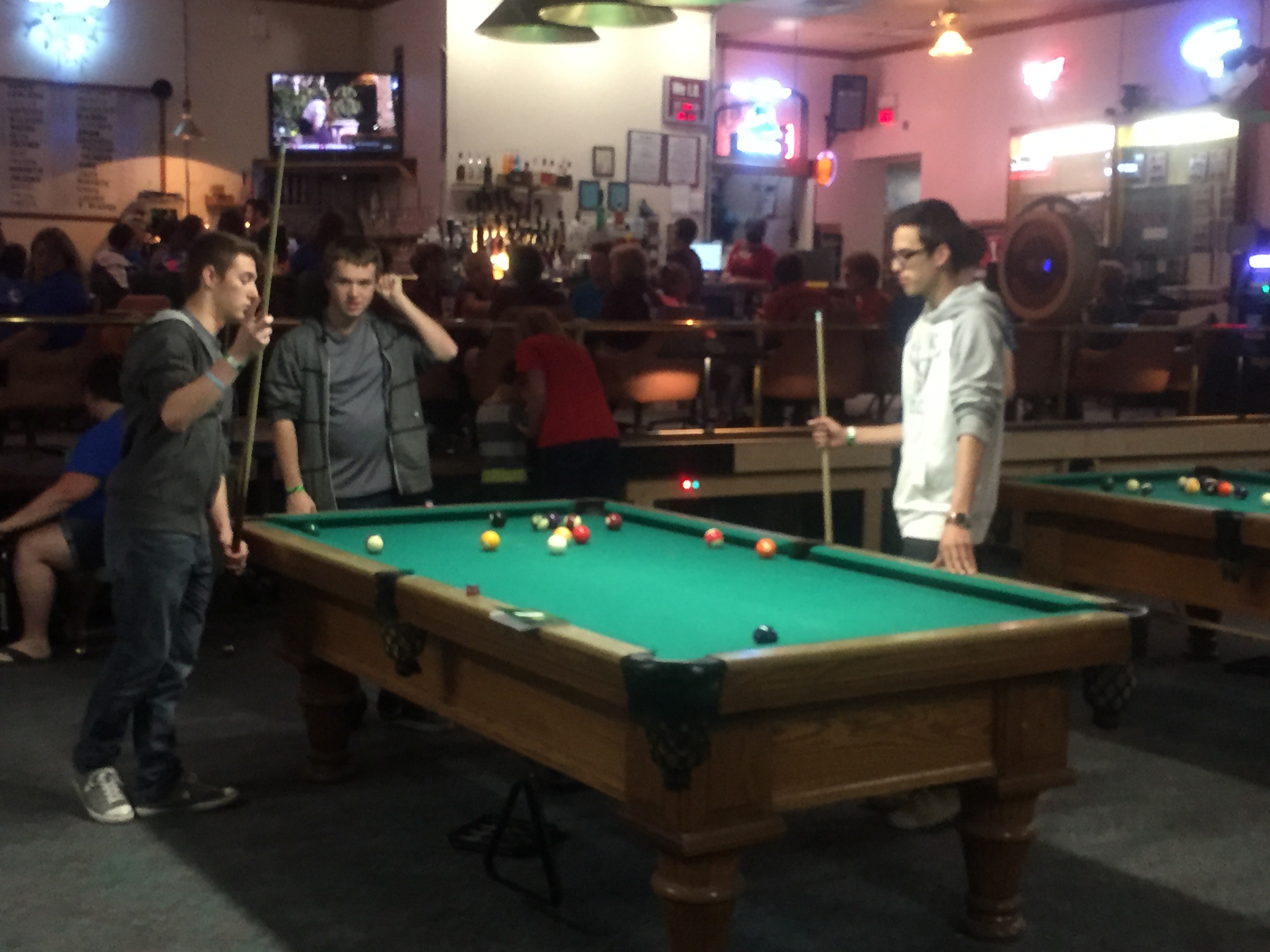
IMG_0518

The first competition was an individual one, billiards. One of T’s brothers actually ended up winning first place!

IMG_0522

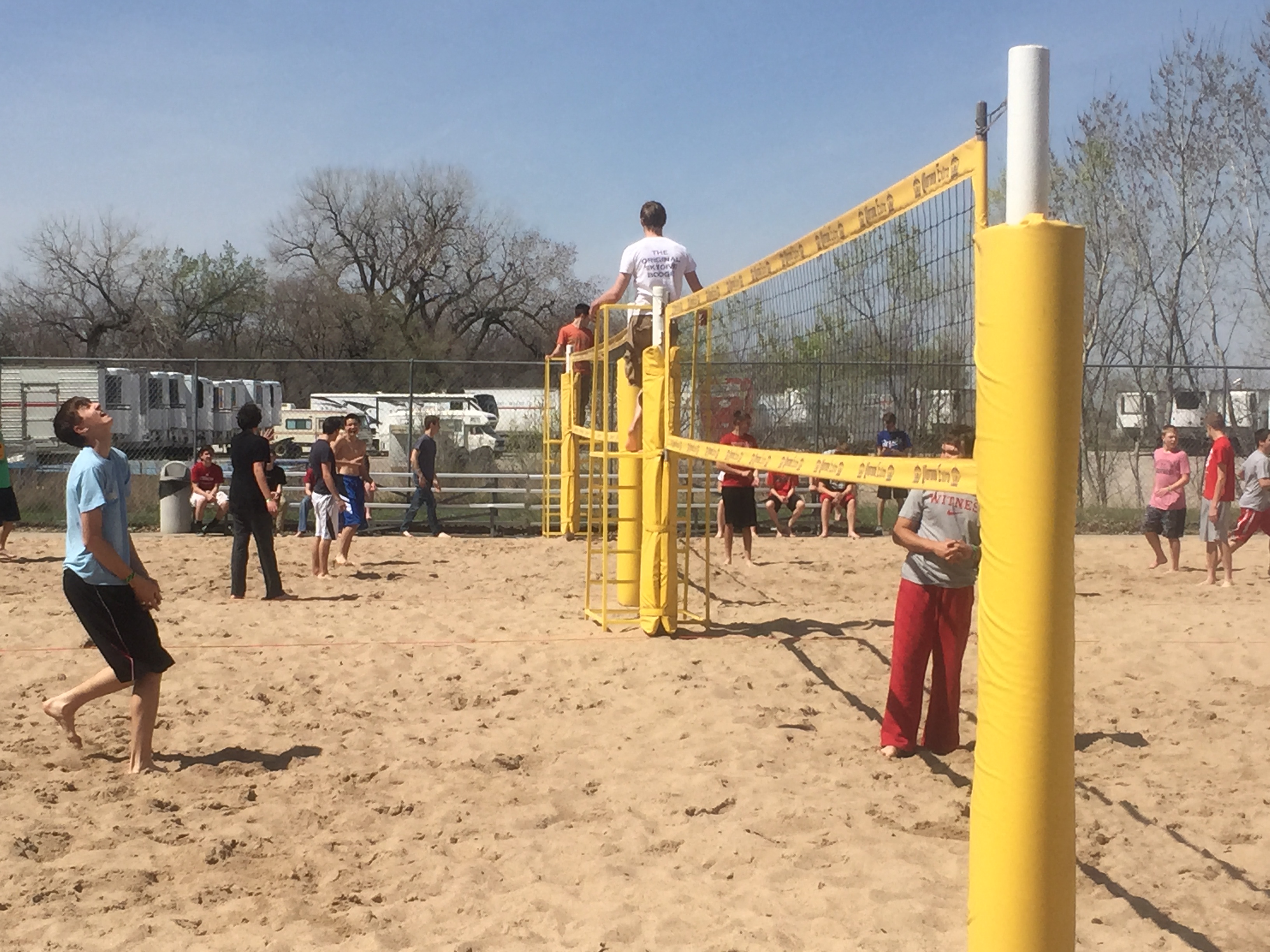
The second competition was team volleyball. They ended up doing both Chapter teams, as well as composite teams made up of players from the various Chapters around the state.

IMG_0524

While not a competition, The Big Apple also had go-karts, which the boys were able to race in.

IMG_0529

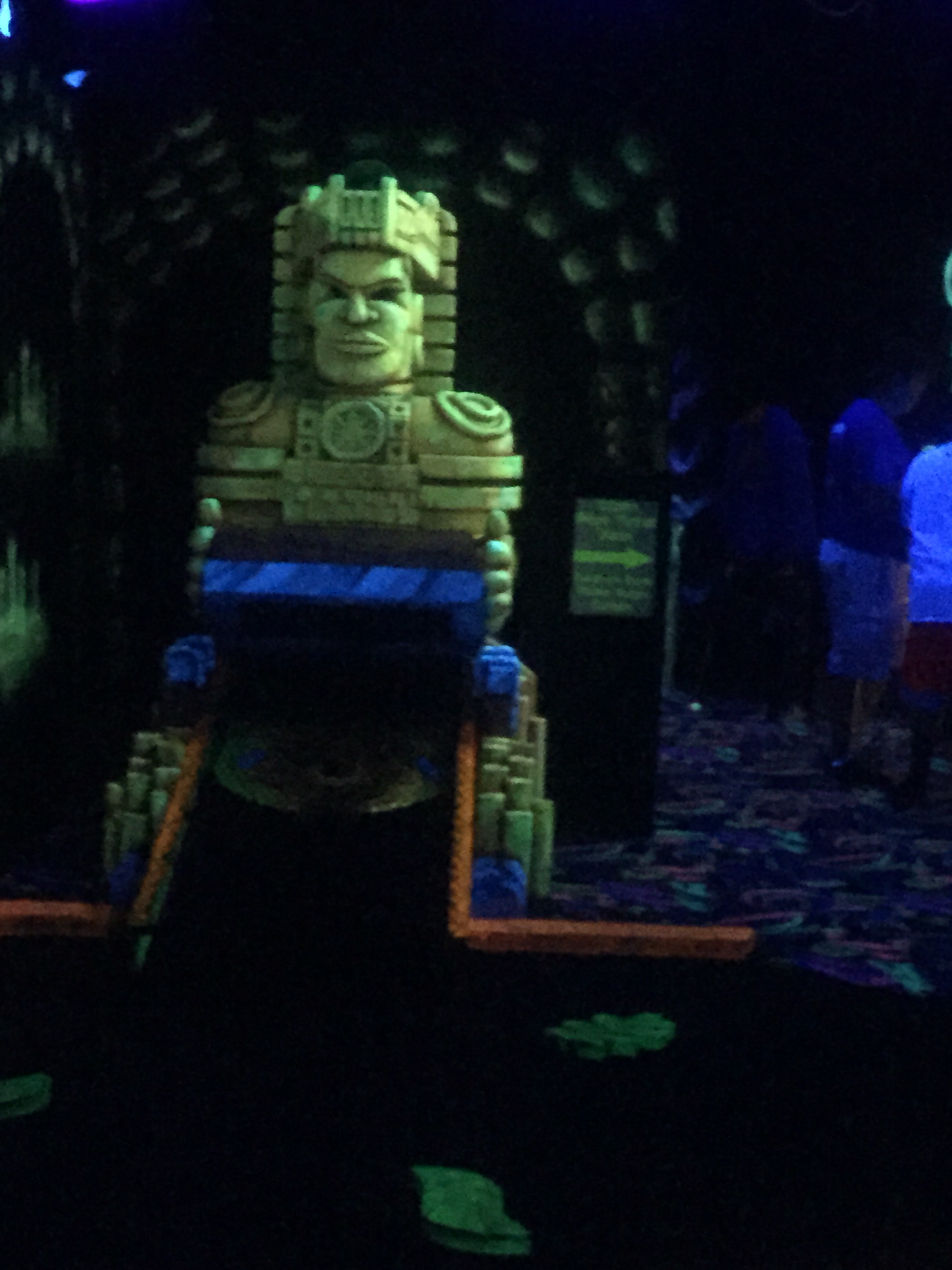
The final competition was mini golf. The course there was probably one of the coolest I’ve ever played.

IMG_0538

I mean, it was really, really cool.

IMG_0537

Like I would drive out there again just to play there.

IMG_0534

Luckily we are in Kearney fairly often for Masonic events, so we will be back.

All of these competitions ended up taking about 6 hours. So I ended up spending a lot of time in the arcade.

IMG_0526

They had bowling as well, which was supposed to be a competition, but we barely had enough time to do what we did.

We then went back to the hotel, and had a quick bite to eat.

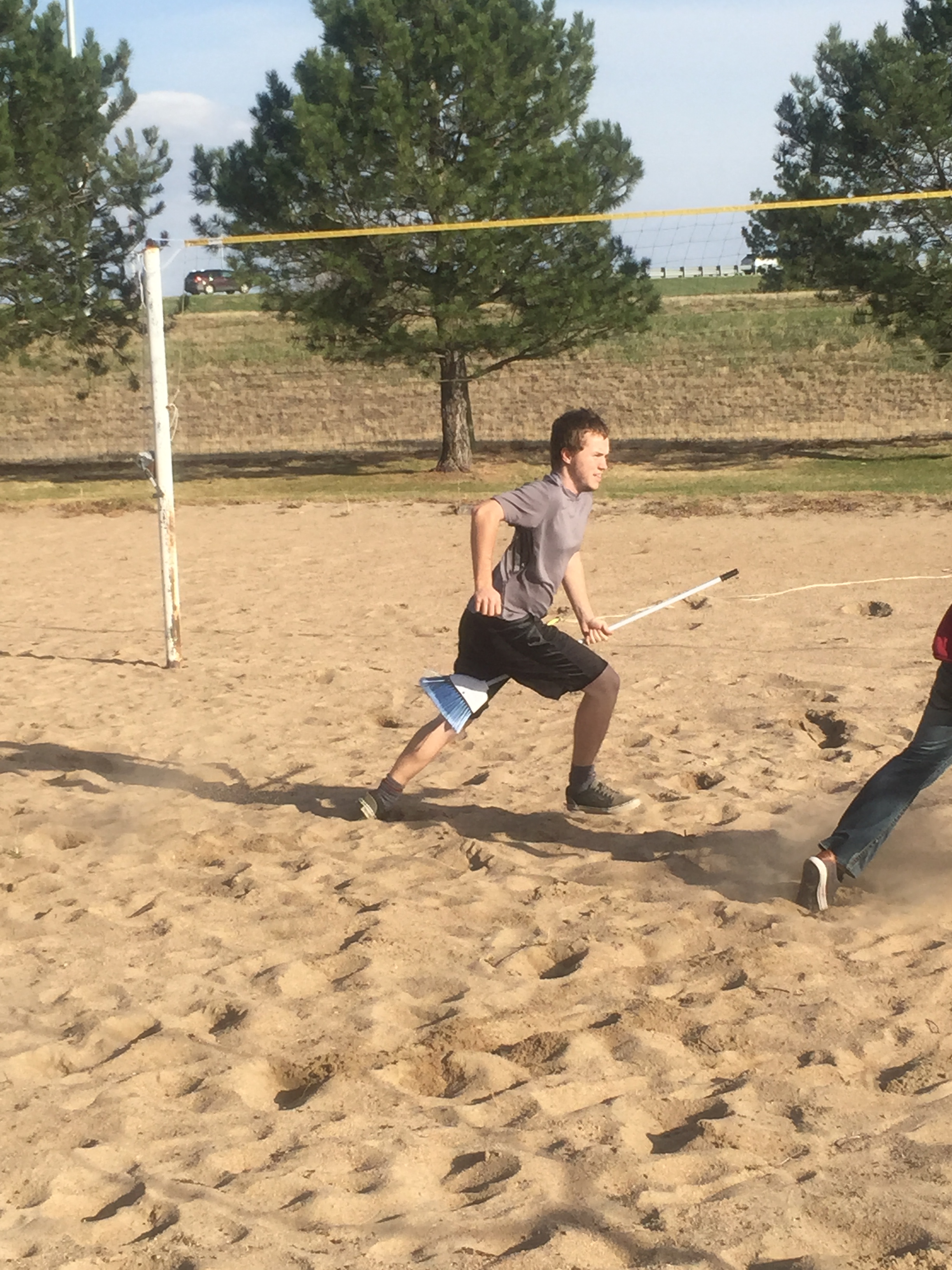
Afterwards, the boys went to the hotel’s volleyball pit, to play a few rounds of Quidditch.

IMG_0550

If you ever get a chance to play, or even watch a match of Quidditch, do it. It is highly entertaining.

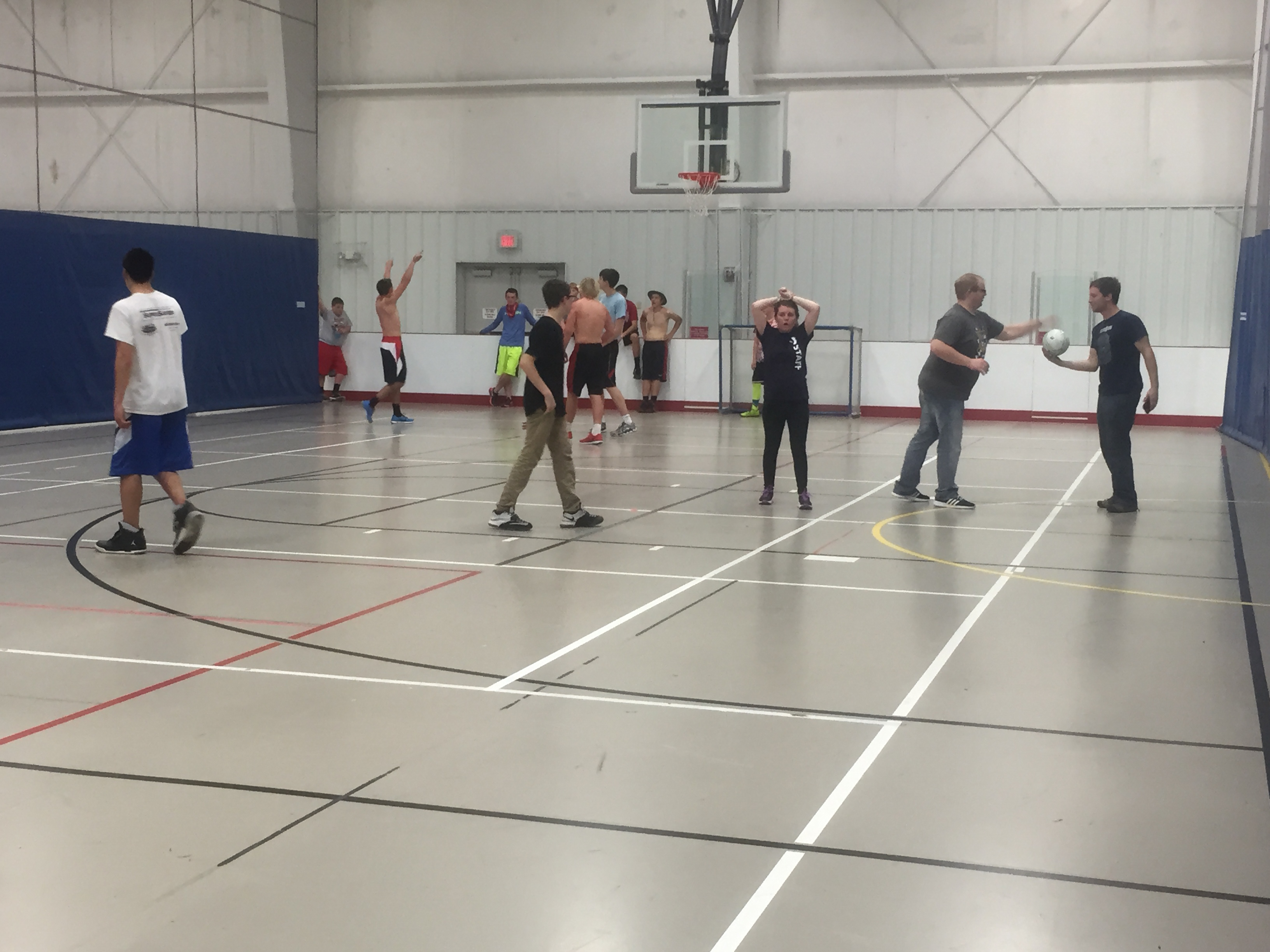
The guys then headed over to the local YMCA, for, you guessed it, more sports.

IMG_0565

The games of the evening were soccer and basketball, done the same way that they did the volleyball.

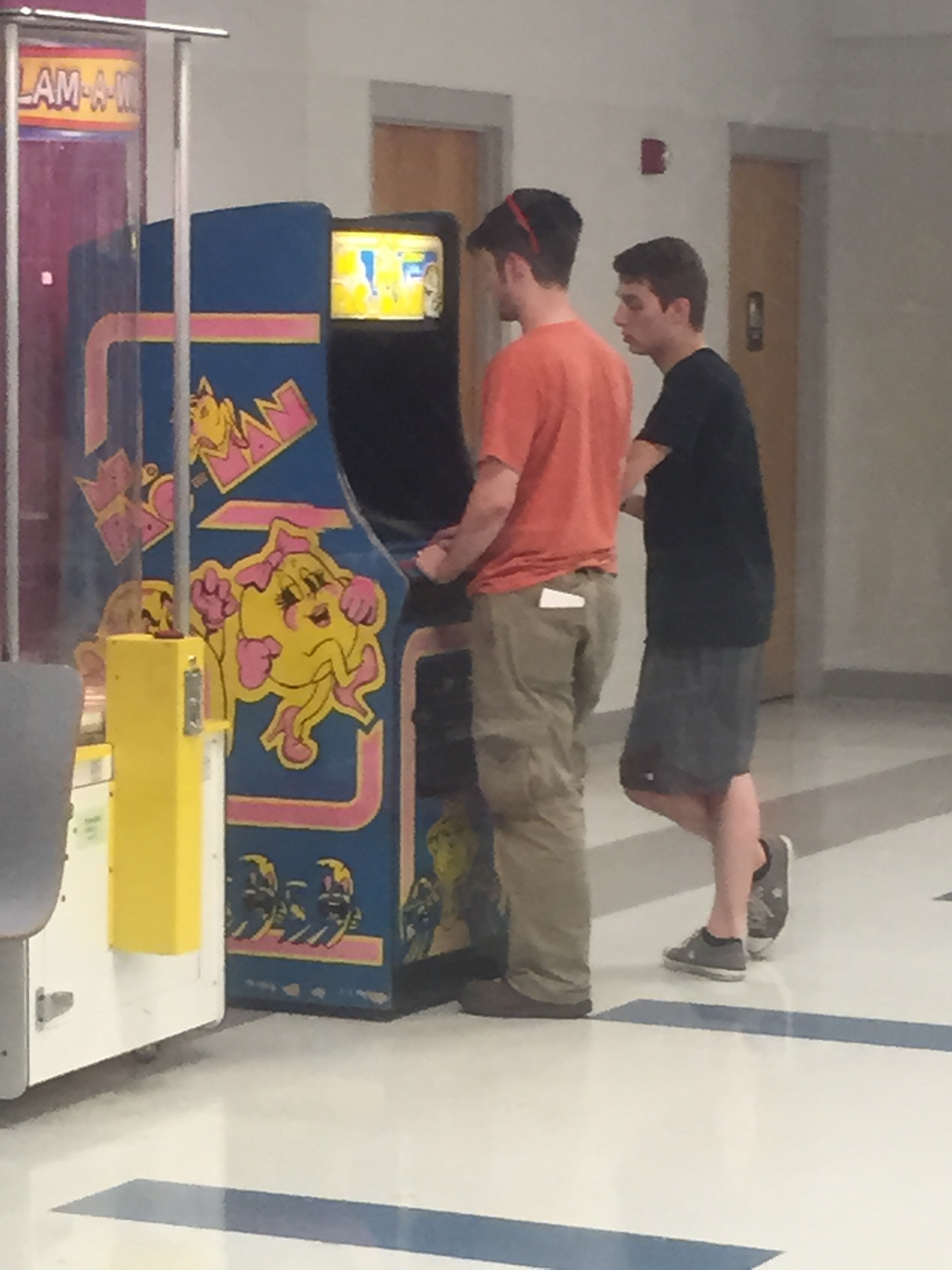
The Y also had a small arcade as well, which some of the nerdier guys preferred.

IMG_0567

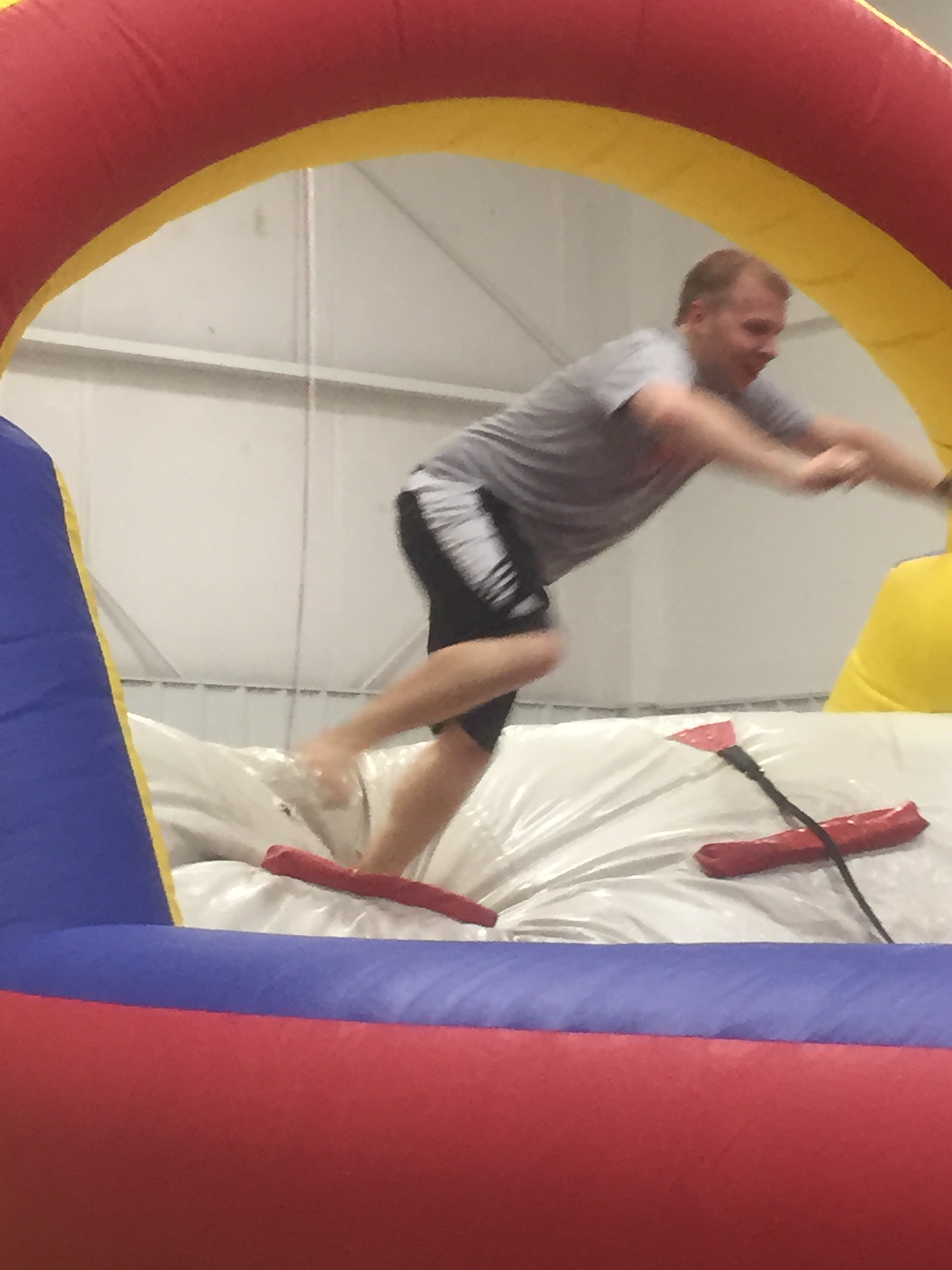
They also had a bounce house, which the adult advisers had to test first, to make sure that it was, you know, safe.

IMG_0561

It was about 10pm by this point. I headed back to the hotel for some much deserved sleep.

Some of the guys, on the other hand, headed to a local Lodge for a Priory investiture.

10325213_910488275657553_5843526497131047574_n

The Priory is a sub-group of DeMolay for boys 16 and older. Investiture is just a fancier word for initiation. I wish that I had been able to stay awake for it, hopefully next time.

Sunday morning was spent doing a DeMolay long form initiation. See, normally, most DeMolay chapters only do a short form initiation when they welcome new members. There is actually an entire play for the DeMolay degree, similar to the ones done during the Scottish Rite degrees. However, this takes a large degree team that many chapters do not have access to. So, once a year at Round Up, Nebraska Chapters have all of their new members go through the long form initiation so that they are able to experience the entire thing. While any adult adviser (including myself), or parent of a DeMolay can watch the ritual, it is still considered secret work, and so cannot be shared here.

After the ritual, awards were passed out for the sporting competitions. Lets just say that Omaha Chapter is not known for its sporting prowess. We then said our goodbyes, and headed home. All in all, a pretty great, if not a bit exhausting, weekend. The sweethearts had a jail fundraiser for Relay for Life where you could pay to put people in “jail” (no phones, no fun), and ended up raising over $500 over the weekend.

On a completely different note, I have created a Tumblr for the Mason’s Lady. Much of what is here will be reflected there as well, as well as some other extras. You can find it here.

The Masonic Ring

I wanted to talk this week about something that tends to be a lengthy and often heated topic, even among Brothers. The issue is often that the Masonic ring can mean many different things to many different people. Some see it as a symbol of their own Masonic journeys and their dedication to the craft, others see it as an opportunity to share Freemasonry with the world and educate others on the topic, and of course, still others see it simply as a ring, and no more.

What is a Masonic ring?

It seems like such a simple question, but it does not have a simple answer. As we know, there are three degrees given within the Blue Lodge, Entered Apprentice, Fellowcraft and Master Mason. Although many things are given to a man when he joins a Lodge (even more so when he becomes a MM), a ring is not one of them. Actually, as a rule, no rings are given to a Mason from his Lodge at all. In fact, there are only two official rings given within Freemasonry to a candidate. Those are the rings given after receiving the 14th and 33rd degrees of the Scottish Rite. Any other ring you may see, has been chosen and purchased by the candidate, or given to him from a friend or family member. Most often the rings that you will see people wearing are rings with a square and compass (Blue Lodge rings) or rings with the double headed eagle (usually 32nd degree Scottish Rite rings). Some men may get new rings after their year as Worshipful Master, or after joining a appendant body (Scottish Rite and the Shrine are the most popular as far as rings are concerned.) It is often recommended (though not necessarily followed) that a man not wear a ring, or other Masonic markings until he has received his Master Mason degree.  There is no requirement that a member wear a ring or any other type of jewelry that may mark him as a Mason.

What does a Masonic ring mean?

Again, this seems like such a simple question, but has no correct answer. There are as many meanings to a Masonic ring as there are men wearing them.. I found this reason interesting:

To be forever bound to your obligation, which is your solemn promise, made of your own free will, before the Great Architect of the Universe, as well as your family, friends and brothers signifying your true and heartfelt desire to be forever bound in unity with the fraternity.

This is of course, not the only answer to the question. Some men use it as a kind of unspoken public promotion of their dedication to the fraternity and their Brothers. Others may wear it in hopes that someone may see it and inquire about it, and bring a new Brother to the fraternity. There are many stories of men who found themselves with a petition in their hands after they had asked a stranger about their Masonic rings. It can also serve as a way to identify other brothers whom you may not know. Of course, simply owning and wearing a Masonic ring is not enough; there are a number of phrases and passes taught to a new Mason that helps identify other Brothers who may be strangers. This is actually very important to identifying members, especially today when anyone can get on the internet and order a ring.

What’s the right way to wear a Masonic ring?

I bet you’re figuring out a pattern in this week’s article. Again, there is no correct answer here. There is no correct or proper way to wear a Masonic ring, except for the way that you feel comfortable wearing it. Many men wear the ring on the ring finder of their right hand, opposite of their wedding band. If you want to wear it on the first finger of your left hand however, no one is going to come knocking on your door wanting you to correct it. Usually, however, it is considered improper to wear more than one Masonic ring at the same time (save that for lapel pins!). In addition to this, many Masons do not recommend using a Masonic ring as a wedding band. The idea here is that if something happens that ends the marriage, you may associate those feelings with the fraternity, and it may  be best to just keep those two things separate.

The big discussion among the brethren is of course, which way the square and compass should be pointing when wearing a Masonic ring. Some men choose to wear the ring so that the two legs of the compass point toward themselves. Some say that this is to remind them of their obligation, or to remind themselves that they are Masons, and that it should reflect in all that they do. For these men, the ring serves as a self reminder of the tenants they honor and the fraternity that they represent. Others wear their rings so that the two legs of the compass point away from themselves. It is said that wearing the ring in this manner, that others see his actions and associate them with Masonry. Wearing the ring with the points facing out is actually more historically accurate. In the past, the rings were used as signet rings, for sealing the wax on letters, and this wearing points up would cause the seal to be right side up. A shorted version of this debate is that the points down reflects the light inward, and the points up reflects it outward. There is no right or wrong way to wear a Masonic ring, you may simply choose to wear it the way that you grab it off your bedside table in the morning. There are no edicts from any Grand Lodge stating the “correct” way to wear a Masonic ring, the choice is yours.

Where can I get a Masonic ring?

Some of us are lucky enough to receive rings as gifts when we receive degrees, or be handed family heirlooms. Others are not so lucky, and we are tasked with finding our own rings. There are thousands out there in all kinds of shapes, sizes, and prices. My number one recommendation for someone that is in the market for a Masonic ring is to look at pawn shops.It’s less of a gamble than buying online, since pawn shops will only buy in rings that are gold plated at the very least.Antique stores are also a great place to look. You may get lucky and get a great price on a really nice ring. Even if you think your town is too small to have any Masonic items in the shops, check it out anyway, you may be pleasantly surprised.

There are a lot of places to get Masonic rings online, and navigating the sites looking for the right one can be a bit daunting.Masonic rings come in many shapes and sizes. T’s looks like a class ring, whereas my OES rings are much smaller and delicate. Many Masonic rings are mass produced, if you are willing to spend a bit more, you can get something custom made. As long as you are a Master Mason, there is no rule as far as what a ring has to have, or can’t have. However, please respect the fraternities, and do not wear a ring for degrees that you have not yet received. It is considered bad taste, and in many areas can bar you from ever receiving the degrees.

This is by no means an exhaustive list.

Amazon is a great source, especially if you aren’t looking to spend much. The rings here start at just $2.

JemsbyJem is a great ring resource, and has some specialty rings you might not find elsewhere, like a Masonic EMT ring.

The Master’s Jewel also has some very unique rings, however as they are all handcrafted they can become quite pricey.

Etsy can be great if you’re looking for an antique or something unique like a spoon ring. Buy carefully here though, often people resell items that you can find for a much cheaper price.

Gordon’s Masonic Rings are great because they are all stainless steel, handmade, and all rings cost the same amount- $105.

Even Walmart and Target get in on it.

If none of those stores have anything you like, you may want to check out the mass market Masonic stores. Again, this is by no means an exhaustive list, and many of these stores carry the same item, so be sure and shop around.

Macoy

Lauterer– Check out the sidebar for more rings

Red Tower Regalia

The MAAC

Freemason Store

Please note that often these store sell more than just Masonic rings, and will usually also sell rings for the major appendant bodies. So, if you are looking for an OES ring, or a Shrine ring, or anything else, many of these stores will also carry them.

Hope that this was an insightful look into something that seems so simple. Have a wonderful week!

Masonic Trivia

Often, Masonry touches all of our lives, and we don’t even know it. Many people know a child who has been seen at the Shiner’s hospitals, or at the very least, have gone to a Shine circus or parade. These are usually things that the general public do not realize are run by Masons at all; often even people who attend these events do not even know what Masons are. The article this week will be a bit shorter than normal. There are a lot of short, sometimes silly little facts that have to deal with Freemasonry that don’t really fit into anywhere else. If it seems that this is well received, I may do similar posts in the future.


  •  A brother was initiated into a Lodge while flying over Paris in a hot air balloon in 1879.


  •   The record number of degrees given in a calendar year is held by Gate City Lodge #522 in Kansas City, Missouri. They met every day of the week, except for Sunday, and conferred 1,107 degrees in 1920. That’s an average of 21 degrees a week!


  •  When Freemasonry first began, the majority of the members were Entered Apprentices, because only the Grand Lodge could raise them, and few got that privilege. They had only one sign, one token and one word; these were referred to as the honors. A Mason who was raised by the Grand Lodge had three signs, three tokens and three words, these were referred to as the Grand Honors. Many Grand Lodges still use the term Grand Honors to describe the highest honorary greeting that shows appreciation for someone who has gone above and beyond in their service for the Grand Lodge.


  • The laying of a cornerstone – the first stone placed when building a new building, came from the stonemasons guild. Freemasons continue this tradition and have a public ritual that can be done when a new building is built.


  •  There have been a number of famous Masons, including:

o  Charles Darwin –scientist and explorer

o   Buzz Aldrin – first man on the moon

o   Nine of the 56 signers of the Declaration of Independence, including Benjamin Franklin

o   Thirteen of the 39 signers of the U.S.  Constitution, Benjamin Franklin and George Washington

o   Fourteen U.S. Presidents

o   Edward Jenner- discovered the cure for smallpox

o   Alexander Fleming- discovered penicillin

o   John Wayne- actor

o   John Elway- football player


  •  You can thank the Lodges in Lousiana for your profiencies (also known as proving up, showing that you have a certain passage from your degree memorized before moving onto the next), they started the practice in 1850.


  • When someone is under a lot of questioning, they may ask why they are “getting the third degree”. This phrase may have originated with the amount of questioning a initiate receives when receiving the Master Mason, or third, degree.


  • Know a non-Mason that sports a square and compass?  In the court case of Hammer vs. the state of Indiana, in 1909, the Supreme Court  ruled that it is a criminal offense to wear a symbol or emblem of an organization that you are not a member of. The reasoning behind it was that organizations with selective membership go through the process of determining whether or not the person is a good fit for the organization or society, and that wearing an emblem that of a group you are not a member of is deceitful and gives a false pretense.


  •  There is a Masonic flag at both the North and South pole, as well as a fez at the North. These were planted by Brothers Richard Byrd and Bernt Balchen. They were dropped from their airplane when they flew overhead. When they returned to the North pole, Bro. Blachen dropped his fez from the airplane.


  • In 1872, the Commissioner of Patents  that no one will be able to hold a trademark or trade name on the square and compass symbol for commercial purposes. This holds true today, and allows all of the different companies to make Masonic apparel.


I hope that you enjoyed this change of pace; as I said before, there are thousands of trivia bits when it comes to Freemasonry. Many of them cannot be fact checked, unfortunately , which is why  I went with the  ones that could be. If you have any questions, or know any Masonic trivia of your own, please feel free to contact me here, or at themasonslady@gmail.com Next week I will be looking at the Masonic ring. As always, have a wonderful week!


Myths about Masonry, Part II

Alright! It’s time to wrap up last week’s article on myths about Masonry. If you missed last week’s article, please check it out for a small intro to the topic, as well as some other myths.

Myth #4- Masons worship the devil, or are involved in witchcraft

I was thinking about where this comes from the other evening in chapter, and came to the conclusion that there are a couple of major contributing factors. As I said last week, Masonry is not a religion, does not take the place of anyone’s religion, and actually requires that someone already have a faith before joining. I think that the first major influence that lead people to believe that Masons were devil worshipers came from G.O.A.T. As you know, goats, or goat heads, are often seen as symbols of devil worship or witchcraft, usually for the purpose of animal sacrifice. You may have seen many Masonic jokes or postcards that show Masons with a goat, or may have heard someone talk about “riding the goat” at a meeting. The Masonic phrase for God, the “Great Architect of the Universe”, or G.A.O.T.U., used to be referred to as “God of All Things” or G.O.A.T. This was changed quickly after the rumors began. In Chapter, I sit at Esther, which is the middle point of the star, and the point that causes so much controversy. I was thinking of why Rob Morris chose an inverted star, also called a pentagram, to represent the order. The traditional line used is that the star “points down to the manger”. This may have some truth, as OES tends to be very Christian oriented. I think that there may be simpler reasons, however. A Chapter room with all officers in attendance is 18 people. That alone can make for a crowded room, and the layout of the officers doesn’t help. If Esther’s point were at the top of the star, it would put three people in a row- the Chaplin, Esther, and the Marshall, which not only would make for a crowded front of the room, but would also result in a very empty back of the room. On top of this, another thought came to me as I sat at this point. If the star was not inverted, and the top point was Esther, this would have the star “point” to the East, and to the Worthy Matron. This may have given people the wrong idea, and think that the Worthy Matron and Patron were those that were meant to be worshiped and revered instead of God. Unfortunately, we may never know the true reason Morris chose this symbol. In addition to these points, someone who is a Satanist could become a Mason, and many have. Often hysteria about a topic begins when someone takes one example and begins to apply it to everyone else that fits even some of those same characteristics.

Myth#5- There are Masonic symbols hidden everywhere, if you know what to look for

Like many myths, this is one that is rooted in some truth. There are Masonic symbols everywhere, if you know where to look. All seeing eyes, double headed eagles, pentagrams, the square and compass, even the cornerstone of a building are Masonic symbols, and can be found almost anywhere if you look hard enough. Many older buildings may have served as a Masonic Lodge, and still bear their symbols. Money, movies, and more things that start with M (as well as those that don’t) can be hiding Masonic symbols “in plain sight”. The important thing to remember here is- many of these symbols are not exclusive to Masonry. Many people claim that the all Seeing Eye on the back of a US dollar is proof that Masons control the government. This symbol actually came from the artist Pierre Du Simitere, who was not a Mason. The concept can be traced back at least as far as ancient Egypt, where the eye of Horus was used as a symbol of power and protection. The pentagram, the symbol for OES, did not acquire any occult meanings until the 19th and 20th centuries, well after Masonry was established. Funnily enough, there is little argument about where the symbols of the Order of the Knights Templar came from. As far as there being a secret square and compass hidden in Washington D.C. that is the secret to the map of the super-secret Masonic treasure? Wishful thinking and often a cause of pareidolia, the scientific word for the psychological phenomena when we perceive vague stimuli as being significant. It has been theorized that humans are hard wired to see patterns like this, to make sense when there is none, in hopes of processing the information a bit easier. This is also the same phenomena that cause someone to see Jesus in a piece of toast.

Myth #6- Freemasonry is a secret society

This one we kind of did to ourselves. A lot of the idea of Masonry being a secret society came about during the 1950’s and 1960’s, its last real big boom. During the obligation, initiates swear that they will not let known any of the secrets presented to them during their initiation. The trouble is, it’s never explicitly stated what is a secret, and what is not. As T says, the only secrets are handshakes, and words of recognition. In our state, anything that is secret is written in code in the ritual book. In OES, all secrets are omitted from writing, and only given by word of mouth (which makes them that much harder to learn). You can learn all you want about Masonry, learn about each officer and what they do, much of the degree work, and even some of a Lodge’s actual business and never even graze learning a secret. The biggest secret in Masonry is that much of our meetings consist of paying the bills, and arguing over who has what percentage share of the building (my Chapter is going through this now, it’s not much fun to deal with, or to listen to). Nothing I ever write here will be a secret, and I have gone fairly in depth on a number of topics. If someone realty wanted to learn the secrets of Masonry, a quick Google search would probably do the trick. I would not, however, recommend doing so if you are, or are ever planning on being involved in the Masonic family. Freemasonry is not a secret society. A secret society would keep its existence hidden, and its membership secret. If Masonry is a secret society, we are doing a terrible job at it. We are very open, not only about our existence, but also about what we stand for, and the work that we do. Freemasonry isn’t a secret society, it’s a society with secrets.

There are a ton of myths and misconceptions out there surrounding Freemasonry. I may return to this topic in the future, simply because there are so many. These are kind of the common ones that you may come across in your lives. If you have any questions about any of these, or have a myth I did not cover that you would like to know about, please feel free to send me an email at themasonslady@gmail.com.  We will be kind of continuing this theme a bit next week, when we look at the sutble ways that Masonry affects the world around us. Have a wonderful week!

Myths about Masonry, Part I

Somehow, I managed to get myself off track as far as my posting day, it keeps slipping further and further into the week! In an effort to get myself back on track, I will be splitting this topic in two, so if you like this one, be sure to look out for more on the same subject next week.

I wanted to take this time to talk about myths and misconceptions. There are many of these surrounding Masonry, and while some are based in truth, more often than not they are way off base. Unfortunetly, it tends to be that popular culture, including movies (i.e. National Treasure), help perpetuate these myths, and people get the wrong idea about Freemasonry as a whole and what its all about. Depending on how much research they do before joining, this can also lead to some iniaties, and even Master Masons having incorrect notions about what goes on within Masonry. There are literally thousands of myths concerning Masonry, but over the next two weeks, I wanted to go over the most popular six.

Myth #1 Freemasons = The Illuminati

This is a big one, in fact, often the words Freemason and Illuminati are used interchangeably, along with shock terms such as “New World Order” and “lizard people”.  Freemasons are not, and never have been, any part of the illuminati (or lizard people for that matter). In fact, the Illuminati refers to several groups, many of which no longer exisit. Origionally, the Illuminati referred to the Bavarian Illuminati, a group formed in 1776, well after the beginnings of Freemasonry. Ironically, the group did their best to oust and prevent things like superstition, abuses of power, and the government purposely preventing all details of an event being known, more commonly known as obscurantism. The group did amass some power, and may have had a large hand in the French Revolution. They were forced underground in beginning in 1784, along with Freemasons and other “secret societies” .(Recall that Freemasonry was much more secretive during this time). They disbanded just before the 19th century, after many of their key leaders left, and most of their secret documents were seized and published. So, how does a group that hasn’t exisited for over 200 years get connected with Freemasonry? It seems that most of this happened around the time of the Morgan Affair, which in turn, caused the Anti-Masonic movement in the 1820’s and 30’s. This may have been in part due to a paper published by a member of the Illuminati titled “On the Influence Attributed to Philosophers, Free-Masons, and to the Illuminati on the Revolution of France.” They did take some cues from Freemasonry, hence the title.

Myth #2 Freemasonry is a religion

Many people think that Masonry is a religion, or that it takes over your current religion. This is simply untrue. I think that this idea comes from the fact that aspects of Freemasonry can mimick that of religion. Within any given religion, there are many rituals, such as kneeling, sitting, or bowing at certain times, as well as certain rituals used for different holidays. Much like religion, Masonry has many rituals within it, many of which are taken from various religions around the world, but most notably Judaism. Many people find comfort within the fellowship found after and before church services, and the same holds true for Freemasonry. Often you will see websites and people saying that Freemasons worship the devil (more on that next week), or that they worship a certain God. The truth is that any man who believes in a higher power can become a Mason, they do not have to be of one religion. In fact, God is often referred to as “The Grand Aritect of the Universe”, in order to make it more approachable to those that do not belong to a mainstream religion. A requirement to become a Mason that many people do not realize, is that one must believe in a higher power. An atheist cannot join regular, masculine Masonry. Many different jurisdictions word it differently, but the concept is the same. Beyond believing in a higher power, however, there is no further requirement. No one religion is required of a member (save for some of the higher orders of York Rite which require a member to be a Christian), and in fact, at the House of the Temple, the big headquarters of the Scottish Rite in Washington D.C., there is the holy book from every major religion in the world. Most Lodges simply use the Bible as their holy book, but an initiate may request that they take their oath on any holy book (this holds true for all appendant bodies), however in many cases they may need to supply their own. Many people also believe that the lessons taught in Masonry go against religions (usually cited as going against Christianity), however, the more you look into what Masonry teaches, you realize that the lessons actually go hand in hand with religion, specifically Christianity, and that many of the lessons and rituals are borrowed from Judaism.

Myth #3 Freemasons control the government, and even some Masons don’t know it


This myth is based on two incorrect notions. The first is that there is a centralized, global body that controls all of Masonry. I would hope that simply by reading this blog you know that this is not the case. Jurisdictions of Masonry vary by state to state, and country to country. In fact, simply because if there was, there would be no debate about whether women should be allowed to be Masons, or how to handle Prince Hall Masons. There is a centralized body for Scottish Rite, as well as for some of the other appendant bodies, but not all Masons choose to join them. It always makes me giggle when I think of the amount of coordination government control would take, which is something the Masonic bodies can struggle with. I’ve heard 20 minute arguments about when to hold a pancake breakfast. Heck, it took T and others three years for Masons in our state to agree to raise the dues $1.50 to benefit their own youth groups. The point is, this organization simply does not exist. Without its existence, the rest of the myth tends to crumble.  The other idea that this myth is based on, is the 33rd degree of the Scottish Rite. Something you will hear a lot of conspiracy theorists say is that nothing is fully revealed until you receive the 33rd degree.  I think that a lot of this comes from the fact that the 33rd degree is not given out that often. It is an honorary degree given to a member who has gone above and beyond for the organization. It is also the “highest” numbered degree that a member can obtain. (The quotes are because it is often said that nothing should be held higher than the third, or Master Mason degree.) Masons who attempt to refute the myth may be told that they don’t know what’s really going on because they have not yet been chosen to receive the degree. It’s silly really, the 33rd degree is not too different from the 32nd, and the 32nd from the 31st and so on and so forth. Don’t let anyone tell you otherwise. You also may hear people say that they are a 97th level Mason, these people claim that there are “hidden” degree beyond the 33rd. Often, these people either have no idea what they are talking about, or are members of a clandestine Lodge.

If you enjoyed this article, please be sure and check out next week’s, where we will be going over three more Masonic myths. Have a great week!

The Benefits of Being a Mason’s Lady

Why do you do it? Why support Masons if you can’t be one? Why bother spending 4 hours making food for a dinner you’re not really invited to? Don’t they hate women or something? It’s something that I’ve been asked probably more times than I care to really count. There are many answers to these questions (one of them being that I just like to cook), but there is one that I feel like is overlooked more than most. It’s not really talked about so much, because only those who are already in the same situation as myself realize it. There are benefits to being a Mason’s lady. I actually almost didn’t write this article, because I felt that it kind of undermined the entire fraternal idea, and seemed a little selfish, but, as T pointed out, it is the truth.

You get to feel like a princess.

I will be the first to admit, I am totally a tomboy. Never one for makeup, I shopped in the men’s section until my mid twenties (and sometimes still do). But, no matter how much any woman may deny it, there is something we can’t help but love when it comes to dressing up and going out on the town. Besides the normal business casual clothes I have that I wear to meetings and monthly Lodge dinners, I have a ball gown and two evening gowns in my closet; not only that, but all three have been worn within the last year, and will be worn again in the foreseeable future. Not many women actually get to go to cocktail parties anymore. Its just simply something that our society has shied away from. Masonry can help women fulfill the need of playing dress up that I am certain most all of us have had since children. What’s more, for those of us who love to shop (not me), Masonic events are always a decent excuse to go clothes shopping. Unlike men who can get away with two pairs of pants, three shirts, and a suit jacket, women are required to have a much more diverse closet. I know that I always feel special when I slip on my fancy gown, heels and makeup, and I can’t imagine that many women feel differently.

Pardon the rude language.

Chivalry is not dead.

Look anywhere on the internet, and you are sure to find something about the death of chivalry, or something about how women are assholes and men stopped trying, or whatever; its irrelevant. Freemasonry and its appendant bodies help bring back and perpetuate the ideals of Masonry. Men act like gentlemen, and women act like ladies. While this does mean you won’t hear anyone cursing up a storm in mixed company, it also means you will often find doors opened for you, drinks bought for you, and someone taking your coat. In many ways, being at a large Masonic event, or even just at a Lodge dinner, it like stepping back in time. Everyone does their very best to be polite and unoffensive, and cell phones at the dinner table are a scarcity. Many people, women included, are turned off by this aspect of Masonry. I for one, enjoy and welcome it. I have often felt that we could use a little old school etiquette in today’s world.

You get alone time.

I’ve said this before, and I will say it again, Masonry is awesome, because it gets T out of the house. Don’t get me wrong, I love the man to death, but I feel that everyone in all relationships is in need of some alone time. Since T has Lodge every Wednesday, that tends to be my “me” night. Wednesdays are the nights I take a long bath, order in from that Chinese place down the street T has disdain for, and put on a horror flick (which he can’t stand). Time apart helps both parties grow and helps your relationship overall evolve. These days, everything can get so crazy, that it feels like you barely have time for your SO, let alone yourself. Masonry is from a different era, and kind of helps slow us down. If you aren’t feeling the alone time, call up some friends and go out, have fun, no one says you have to be at home waiting for him to walk though the door while he’s at Lodge.

There’s more tangible, monetary benefits than anyone realizes.

Don’t get me wrong, there are a ton of intangible benefits out there. The love and support that I receive from my Masonic family goes far beyond what I ever might have expected to get from them. That being said, its nice to have some tangible stuff too. Unfortunately, there’s nothing so simple as flashing your dues card for a discount on your hotel room like AAA. The majority of the benefits fit into one of two categories: monetary, and opportunities. There’s scholarships for everyone in your family, for just about anything you could ever want to do. College? Of course. But beyond that, band camp, leadership conferences, golf tournaments, the circus, ordering t-shirts online, and more. There is almost always a scholarship or monetary discount on all public events put on by a branch of Masonry for the members and their families. If you aren’t sure if there is a discount, or if you cannot afford something you really want (or need) to attend, ask those around you! They are sure to help you out, within reason of course. In addition to this, there is an emergency fund to help member’s families in dire need. You can read about that here.

The other thing that I think is overlooked pretty often is the opportunities available. Sure, there are plenty of opportunities for the Mason himself, and these are not as easily forgotten. Many of these opportunities extend to his family as well, both SO, as well as any children. These tend to come within two forms. The first is the formal opportunity, a chance to go on a field trip to Kansas City to see the DeMolay headquarters, or a last minute opening in an interesting conference. The other type of opportunity is more informal. This is the kind that comes not from the organization itself, but from its members. Always wanted to learn how to knit but never got the hang of it? Maybe the Junior Warden’s wife owns a yarn store. Kiddo is looking for his first summer job? Bro. John needs help tearing down an old shed on his property. The opportunities here are endless. A word of caution however, this is one of the reasons that people tend to get hung up on the idea of Freemasonry. No one should join Masonry in order to receive any of these benefits, they should simply be seen as an added bonus.

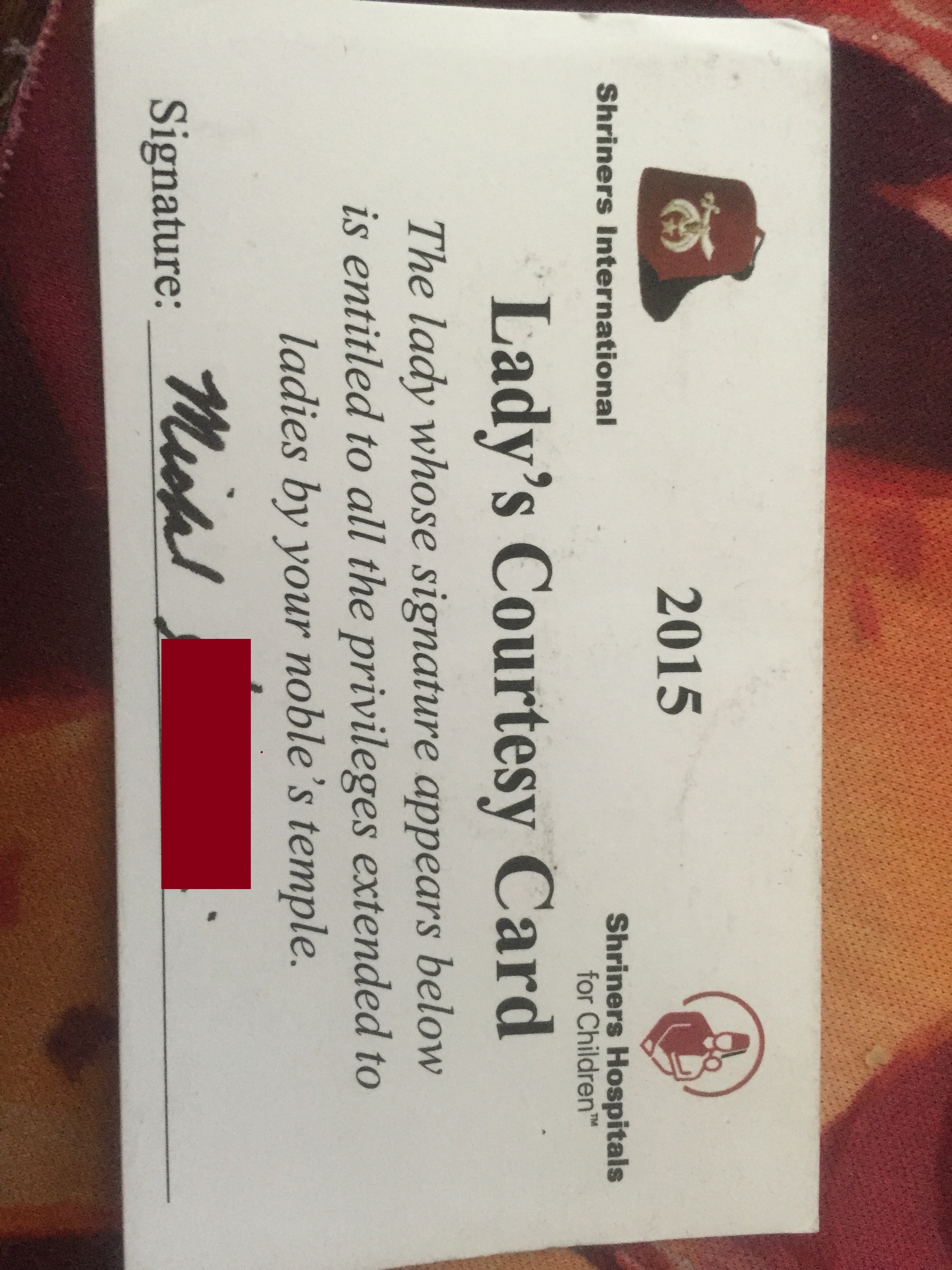
IMG_0412

Other little things that you may find happen as a Mason’s lady. Once T joined the local Shrine, I received my own “membership card” which is kind of neat. More or less it grants me access to the members only bar at the Shrine. T and I were able to take our engagement photos at the Scottish Rite, a beautiful building downtown. We were even able to get on the roof. These kinds of things are my favorite; the little things that don’t really seem like much, but always add up to every moment involved in Masonry being worth it.

I hope that I did not stray too far from the ideals of this blog, and didn’t come off as a selfish, coincided woman. If I did, I apologize. I actually almost titled this article “The Benefits of Putting up with Masonry”. There are a lot of pros and a lot of cons for being a Mason. Sometimes it might feel like the guys get all the pros and the girls get all the cons. Hopefully this article helps give some perspective on the pros for the ladies too. If you have any questions, or have any thoughts on this topic, please let me know. And as always, have a wonderful week.

The Daunting Task of Memorization

I’m not going to lie to you, I am really good at putting things off. Like many of you, I’m sure, if cleaning, homework, or even writing on this blog can wait until later, it will probably happen. This, unfortunately, leaves me in the position I am in currently. The deadline is swiftly approaching, and I have not even started on what needs to get done. In this case, I have been putting off some memorization work.

As some of you may know, I was invited to act as the star point Esther in my OES chapter. The normal opening work is only a paragraph, but for an initiation, its more like nine. We are having a “straw” (or practice) initiation tomorrow night at our meeting. How much of my part do I have memorized? Zlich, nada, nothing. This article is as much for me as it is for you.

Memory work is a large part of Freemasonry and its appendant bodies. When everyone has their parts memorized, it helps make the opening of the chapter, or the degree given to a candidate, seem seemless and smooth. When someone does not know their part, it shows, and it can be painful to watch, and even jarring to the candidate.Ideally, all ritual work should be memorized, most, if not all, Masonic groups do not allow an open ritual book in an open chapter meeting. There are exceptions to this of course, my OES chapter has a prompter who does have an open ritual in order to help those who stumble get through their parts (although I am sure she could do her job without it). Few, if any boys in my DeMolay chapter have their parts memorized, although T is offering cash money to those who do, in hopes of making the meetings run more smoothly.

How do I even begin?

Memorization can be a daunting task. It feels like you will probably never get there, and that everyone who has their parts memorized are some kind of super geniuses with some sort of memory lobe in their brains that you seem to be missing. The biggest thing to remember about memorization, is that it takes time. You can’t just sit down for 15 minutes and be able to repeat something word for word after the first time. Memorization takes a lot of repetition, not only reading the parts at home, but also attending meetings. There is a big difference between sitting on your couch repeating your part to your cat, and saying the same part in front of a room full of people, and remembering all of the coordinating floorwork, signs, and passes.

The first step to memorizing a part of ritual is to read it. Not just once either, but several times. Be sure to look up words that you do not know the meaning of, or do not know how to pronounce. Ritual work is almost written in its own language, and often includes words that are no longer common in today’s vocabularies. Try to understand the meaning of the part; you will remember what to say a lot better if you understand what the message is trying to convey, rather than simply repeating words. The next thing you want to do is look at the punctuation. Pauses occur often in ritual work, and often have a purpose. You may need to wait for the canidate to reach a certain part of the room, or for a sign to be given to you, before you continue on with your part.

How do I actually memorize it?

There are a ton of different methods out there as far as ways to memorize a part. Once you feel familiar with the part, the hard work begins. I know that the way that T memorizes, and the way that he teaches others to memorize, is to look at the first sentence, repeat it a few times, then close the book, and repeat it aloud; also known as rote memorization. He then moves onto the next sentence, and repeats both the first and the second sentence, returning to the beginning when he gets stuck. This is a very common method for memorization. There is only one flaw with it; people tend to start strong and end weak, because they know the ending better. A solution to this is to work backwards once you are able to repeat it forwards. If you decide to do this, you start with the last sentence, and then add the second to last sentence, working in the same manner as the way that you learned the part before. You may also find that breaking it into parts also makes it easier to memorize in this manner. Be sure to say the parts aloud, there is a big difference between reading the parts in your head, and actually speaking the words.

Another idea is to study your part before you go to bed, and then go back through it when you wake up, to see how much you remember from the night before. Using this method gives your brain to process what it is you’re learning. The reason for this is that your brain is more active in the morning right after you wake up, so anything that you study just before bed or as soon as you wake up is more likely to stick. This method also helps encourage long-term memorization, as you will have to recall the part from day-to-day.

You may also find that seeing the parts done helps you remember the parts themselves. If you have a number of other Lodges or Chapters in your area, visit as often as you can. You will find that you will begin to pick up and cues and words without even thinking about it. This is also very useful for new members, who have not been exposed to a lot of the ritual work.

Utilize technology that is available to you. There are a number of websites and apps out there to help you memorize parts. You may be able to find the part that you need available online, so that you do not also have to type up the part, which can often be lengthy. The majority of these websites and apps basically do the same thing. You read the part, and words are slowly covered up, eventually only showing a blank page. Some websites that do this are Memorize Now and Memorizer an app that works in a similar fashion is iMemorize (available for iOS and Android). Another app that you may find useful is called Memorize Anything. Basically a fancier version of the voice recorder, this app allows you to record yourself saying the part, and then play it back to you at any time.

Memory work can seem like a daunting task. However, the biggest part of memory work, is that it takes time. If you have a part to memorize, take a little time every day, just 15-20 minutes, to work on your piece. Within a week you will find it comes much easier to you, and a few weeks later, you should have no issue reciting your part from memorization. The biggest tip I can give is; learn from my mistake, don’t put off memory work until the last-minute!

Leader of a Nation

Today is one of those holidays that no one really celebrates except the post office and some banks. Kids will learn about it in school, but unless you have children of your own, I am sure that President’s Day is far from your mind. I wanted to serve as a reminder of the holiday today.

There are only 14 presidents who were also Freemasons, not all 43 like many conspiracy theorists would have you believe. They are:
  • George Washington
  • James Monroe
  • Andrew Jackson
  • James Polk
  • James Buchanan
  • Andrew Johnson
  • James Garfield
  • William McKinley
  • Theodore Roosevelt
  • Howard Taft
  • Warren Harding
  • Franklin Roosevelt
  • Harry Truman
  • Gerald Ford

If you would like to learn more about any of these men, check out this link, which includes dates, and Lodges of membership.
Many other presidents have Masonic rumors about them.
-Many people believe that Abraham Lincoln was a Mason, but he never went through with the degrees. He did turn in an application, but decided to wait to join until after the presidential election, so that it would not appear that he was joining only to seek votes. Sadly, he was assassinated before he was ever able to return.
-Lyndon Johnson received the Entered Apprentice degree, but he chose not to go further after being elected to congress in 1937. He felt that his congressional duties took up too much time.
-Thomas Jefferson and James Madison are both believed to be Masons, but at this time, their membership has not yet been confirmed.
-Ronald Regan is not a Mason, but is an honorary member of the Shrine.
-Bill Clinton was a DeMolay, but never became a Mason.

The Unfinished Portrait of George Washington

What’s the deal with George Washington?
 
If you have ever been in a Lodge room, and had time  to look around, chances are that you would have seen a portrait of George Washington on the wall. It might seem a bit out of place to you. However, Washington was a extremely prominent figure, both in U.S. history, government, and Freemasonry. It is said that he embodied the ideals of both America and Freemasonry, so US Masons tend to revel him. Some Lodges may refer to him as “the perfect Ashlar”, a end goal for every Mason. The concept of each state having its own jurisdiction in Masonry, parallel Washington’s ideal of state’s rights. We use both of these models today. Any portarit of George Washington may be displayed within a Lodge, but the unfinished portrait of Washington done by Gilbert Stuart tends to be the most common.
I hope you enjoyed this short history lesson. Have a wonderful week!